
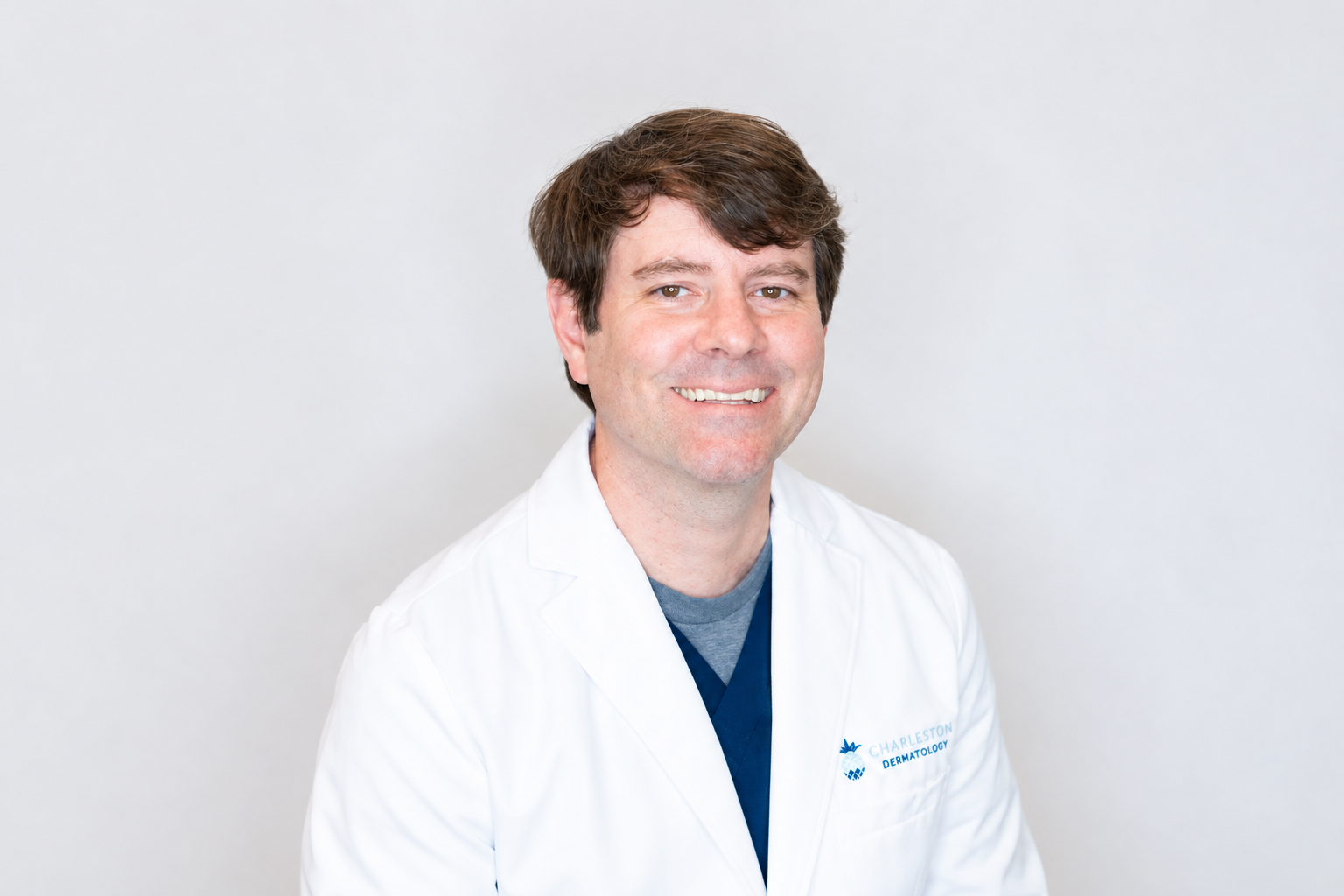
Meet Dr. Lee Yarbrough, Your Charleston Dermatologist
- services
- skin-conditions
- skincare-tips
Choosing a dermatologist is a personal decision. You want someone who listens, explains things clearly, and knows the skin conditions that matter to you. It also helps to know a little about the person behind the exam room door.
This month, we’d like to introduce you to Dr. Lee Yarbrough, a board certified dermatologist who has been caring for patients across the Lowcountry since 2009. Here’s a look at his background, what he treats, and when it might be a good time to book a visit.
Who Is Dr. Lee Yarbrough?
Dr. Yarbrough was born and raised in Louisiana. He earned his undergraduate degree at Texas A&M University, where he studied biomedical engineering, and his medical degree at Louisiana State University (LSU).
He then completed his dermatology residency at the Medical College of Virginia, part of Virginia Commonwealth University. During his residency, he served as chief resident, a role given to a physician chosen to help lead the residency program.
Dr. Yarbrough is board certified by the American Board of Dermatology. That means he has completed advanced training and passed rigorous exams in the field. He is also a member of several professional groups, including the American Academy of Dermatology, the American Society for Dermatologic Surgery, the South Carolina Academy of Dermatology and Dermatologic Surgery, and the Charleston Dermatology Society.
Life Outside the Office
Away from work, Dr. Yarbrough lives in the area with his wife and their three children. He enjoys live music, golf, and college football. [Optional: add a quote or favorite local spot from Dr. Yarbrough, if approved.]
What Does Dr. Lee Yarbrough Treat?
Dr. Yarbrough offers care for all skin conditions in children and adults. He has a special interest in a few areas, and we’ve explained each one below in plain language.
Eczema, Psoriasis, and Other Rashes
Eczema (also called atopic dermatitis) is a condition that can cause dry, itchy, inflamed skin. Psoriasis is a long-term condition in which skin cells build up faster than normal, which can lead to thick, scaly patches. Rashes can have many causes, from allergies to infections to underlying conditions. A dermatologist can help figure out what’s behind yours and talk with you about treatment options.
Skin Cancer
Skin cancer is the most common cancer in the United States, and it is highly treatable when caught early. Regular skin checks help spot changes sooner, and your dermatologist can look at spots you’re unsure about.
Skin Infections
Skin can be affected by bacteria, viruses, and fungi. Infections may cause redness, warmth, swelling, bumps, or a rash that doesn’t clear up on its own. A dermatologist can help identify the cause and recommend the right treatment.
Removal of Skin Lesions, Moles, and Skin Cancers
A skin lesion is any area of skin that looks different from the skin around it. Some lesions are harmless, while others need to be removed or tested. Dr. Yarbrough performs surgical removal of lesions, moles, and skin cancers.
What to Expect at Your First Visit
Every visit is different, but here’s a general idea:
- You’ll share your history. Be ready to talk about your concerns, any medications you take, and any family history of skin conditions.
- Your dermatologist will examine your skin. This may include the area you’re worried about or a full skin exam, depending on why you’re there.
- You’ll talk through next steps. That may include a treatment plan, a test, or a follow-up visit.
- You can ask questions. Nothing is too small to bring up.
Risks and Considerations
Every treatment has benefits and possible side effects, and what works for one person may not work for another. Dr. Yarbrough can talk with you about your options so you can decide what feels right. If you’re having surgery on a lesion or mole, you may also have questions about healing and scarring, so it’s worth asking before your appointment.
When to See a Dermatologist
It’s a good idea to schedule a visit if you notice:
- A rash or itchy patch that doesn’t improve or keeps coming back
- A mole or spot that is changing in size, shape, or color
- A sore that doesn’t heal within a few weeks
- A skin issue that is affecting your sleep, comfort, or confidence
- Signs of infection, such as increasing redness, warmth, swelling, or pus
If you have trouble breathing or swelling of the face or throat, seek emergency care right away.
Schedule a Visit With Dr. Yarbrough
Getting to know your dermatologist can make it easier to ask questions and get the care you need. If you’d like to meet Dr. Lee Yarbrough, book an appointment at Charleston Dermatology.