
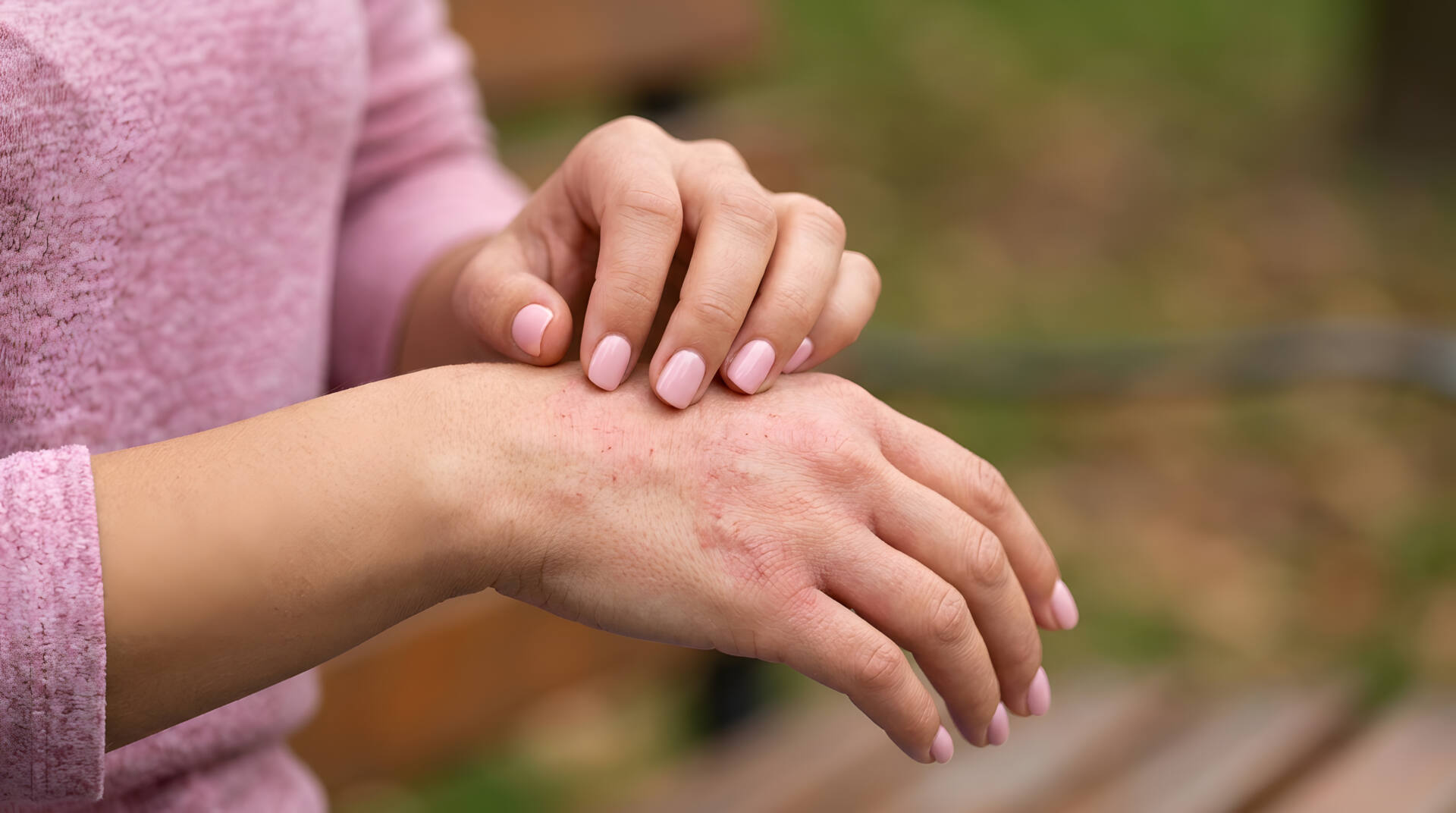
Eczema and Dry Skin: Preparing For Your Fall Skin Transition
- services
- skin-conditions
- skincare-tips
Summer in the Lowcountry is tough on skin, and the shift into fall can catch people just as off guard if they’re not ready for it. As temperatures start to drop and humidity fades, skin often begins to feel tighter, flakier, or itchier, and for those who live with eczema, this seasonal shift can trigger a flare before they see it coming.
The good news is that most of this fall skin transition is easy to prepare for with a few adjustments made ahead of time. The trickier part is knowing where “normal seasonal dryness” ends and a real eczema flare (or another skin condition) begins.
This guide walks through what typically happens to skin as fall approaches, common eczema and dry skin triggers to watch for this time of year, and how to get your skin ready before everyday dryness turns into something that deserves a closer look.
Why Skin Changes When the Seasons Shift
Your skin has a protective outer layer called the skin barrier. Think of it like a brick wall: skin cells are the bricks, and natural oils and lipids are the mortar holding everything together and keeping moisture in. In the summer, humidity and sweat help keep that barrier hydrated. Once the air starts to dry out heading into fall, that moisture disappears faster than your skin can replace it, which is exactly why preparing ahead of time matters.
For people without a history of skin conditions, this usually shows up as mild dryness, some flakiness, or occasional tightness. For people with eczema (also called atopic dermatitis), a chronic condition that causes patches of inflamed, itchy skin, a weaker or more reactive skin barrier means this seasonal moisture loss can trigger a full flare rather than just a little dryness.
Common Seasonal Flare Triggers to Watch For
Several factors tend to line up as summer turns to fall and can make skin more reactive. Knowing what’s coming makes them much easier to prepare for:
- Lower humidity and cooler air, which pull moisture out of the skin faster
- Hot showers and baths, which feel great as it cools down but strip natural oils
- Indoor heating, once it kicks on later in fall, which dries out indoor air further
- Leftover sun exposure or sunburn from summer that’s still healing
- Switching back to heavier fabrics like wool or synthetic blends that can irritate sensitive skin
- Fragranced products, including some sunscreens, body washes, and lotions, that were more tolerable when skin was better hydrated
Many people find that a combination of these triggers, rather than just one, is what pushes skin from mildly dry into a genuine flare.
Eczema and Dry Skin: What’s Normal vs. What Isn’t
It can be hard to know when dry skin is just dry skin. Here’s a general way to think about it, though your provider is always the best resource for anything that concerns you.
Likely normal seasonal dryness:
- Mild flaking or rough patches, especially on hands, arms, or shins
- Occasional tightness after showering
- Skin that responds well within a few days of using a heavier moisturizer
Signs it may be an eczema flare or something else worth checking:
- Itching that disrupts sleep or daily activities
- Red, inflamed, or thickened patches that don’t improve with regular moisturizer
- Cracking, oozing, or skin that feels hot to the touch
- Patches that keep showing up in the same spots (inner elbows, behind knees, neck, and hands are common areas for eczema)
- Dryness that doesn’t improve, or gets worse, after a week or two of consistent moisturizing
If you’re in the second group, it’s worth talking with a dermatology provider rather than cycling through more over-the-counter products. Eczema responds well to the right treatment plan, but figuring out what’s actually going on is the first step.
A Simple Fall Skin Checklist
A few small changes now, before the season fully turns, can make a real difference in how your skin handles it:
- Switch to a heavier, fragrance-free moisturizer. Lightweight summer lotions often aren’t enough once the air dries out. Look for ingredients like ceramides, hyaluronic acid, or petrolatum.
- Shorten and cool down showers. Long, hot showers feel good but can worsen dryness. A few extra minutes at a lower temperature protects your skin barrier.
- Moisturize within a few minutes of bathing, while skin is still damp, to help lock in hydration.
- Reintroduce sunscreen as a daily habit, even as summer ends. Charleston sun is still strong well into fall.
- Watch for new irritants as you swap in fall clothing and skincare, and patch-test anything new if your skin is sensitive.
- Keep a symptom note if you suspect eczema. Tracking when and where flares happen can help your provider identify your specific triggers.
When to See a Dermatology Provider
It’s a good idea to schedule a visit if you notice itching that affects your sleep or daily routine, redness or irritation that doesn’t improve after a couple of weeks of consistent moisturizing, skin that cracks or weeps, or flare-ups that keep returning in the same areas. This is especially true if you’ve never been formally diagnosed with eczema but suspect that’s what you’re dealing with. A proper diagnosis makes it much easier to find a treatment plan that actually works, rather than guessing your way through drugstore shelves.
Get Ahead of Eczema and Dry Skin This Fall
Some seasonal dryness is just part of the Lowcountry’s summer-to-fall transition, and a little preparation now goes a long way. But if dryness turns into ongoing irritation, itching, or flares that don’t respond to a good moisturizer, that’s a sign it’s worth a closer look. Our team can help you figure out what your skin actually needs this season, whether that’s a simple routine adjustment or a treatment plan for eczema. Schedule an appointment with us today.